

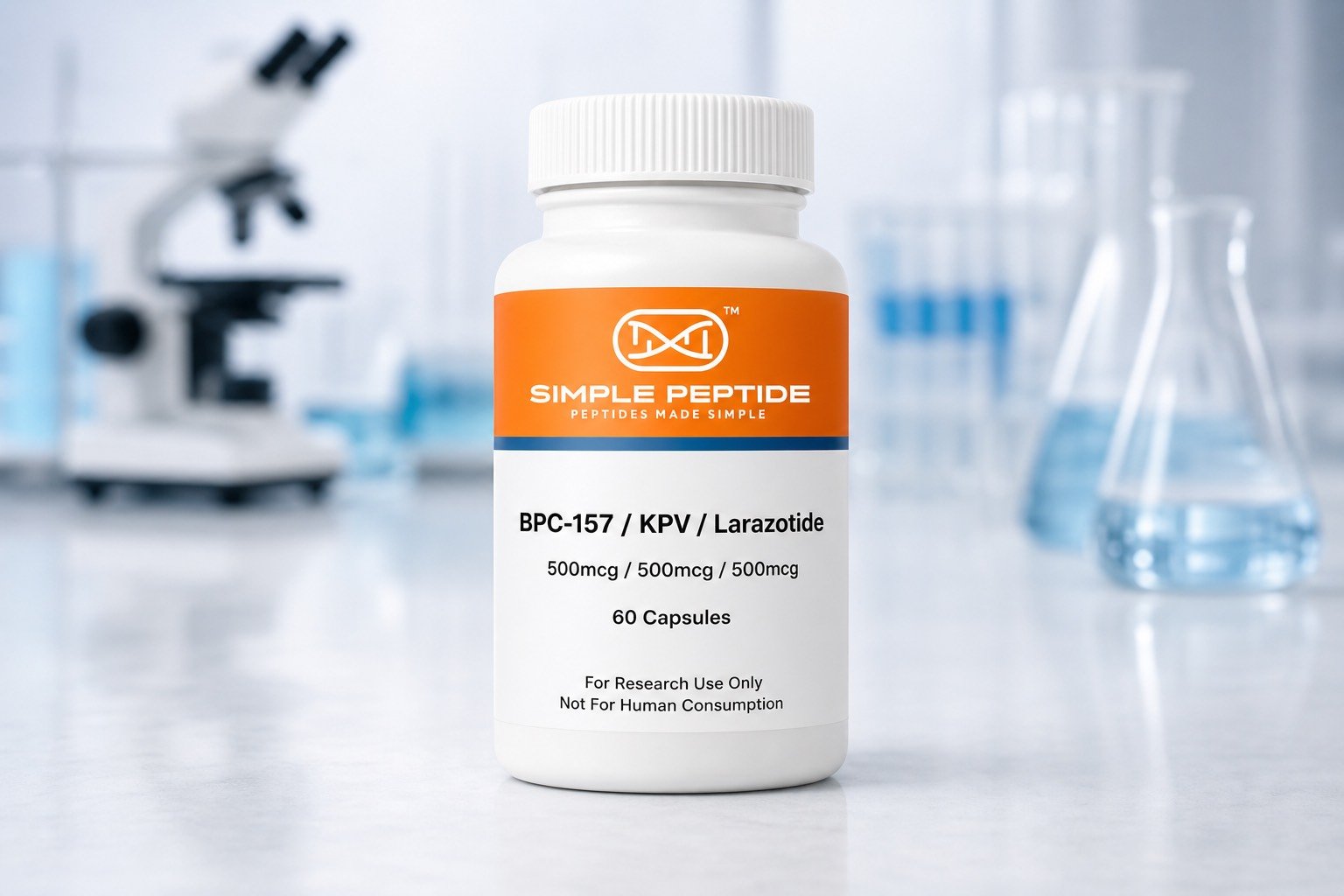
Simple Peptide Triple-Action Oral Peptide Compound: BPC-157, KPV, and Larazotide Acetate
Strictly for Laboratory and Research Applications Only.
This compound is sold exclusively for in-vitro experiments, testing, and scientific study. Not intended for use as a component of, or supplement to, any finished product intended for distribution to, or consumption by, individuals.
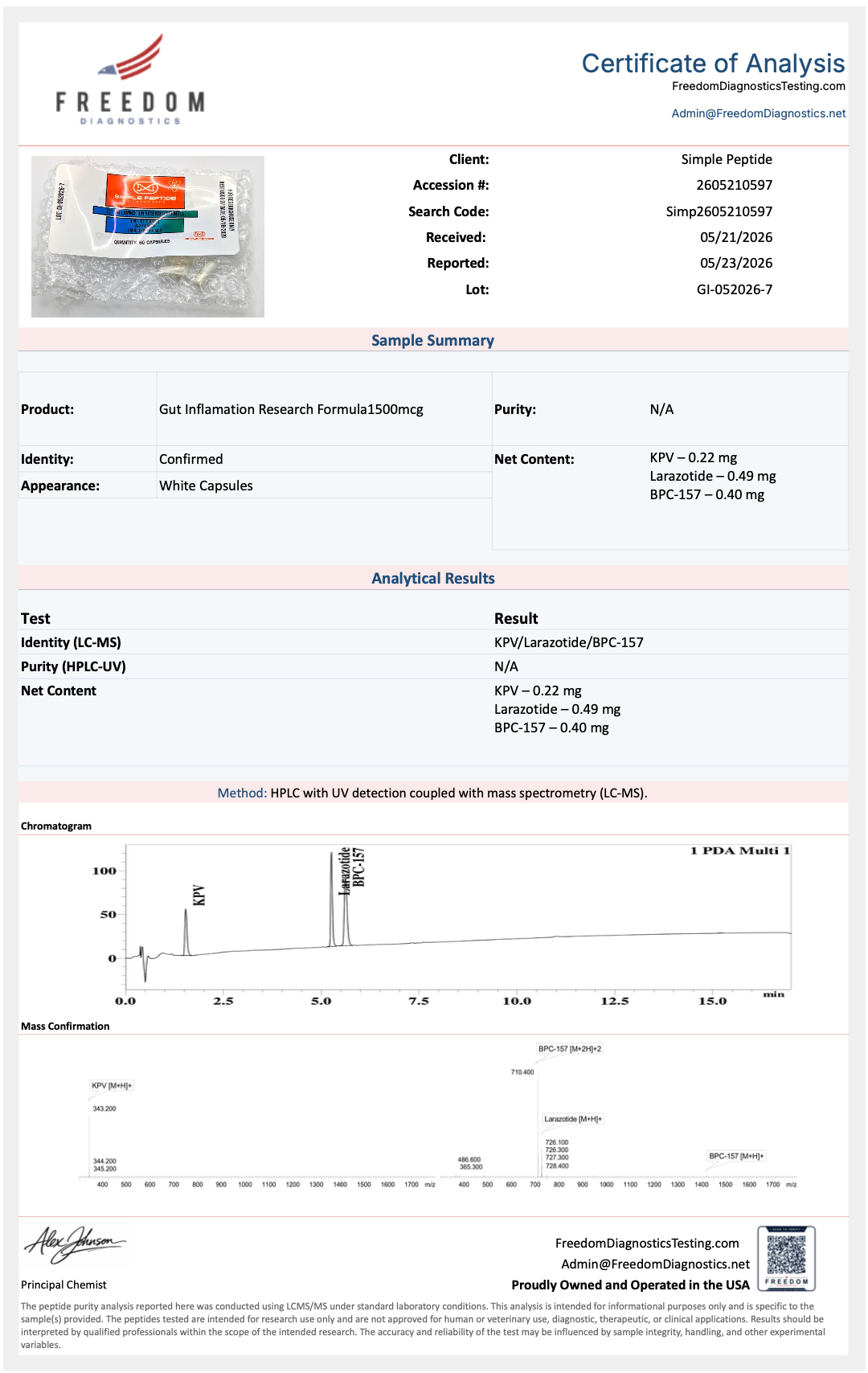
This tripartite compound offers a formulation of three distinct gut-active peptides for models investigating gastrointestinal integrity and repair. This blend features compounds engaging three core processes: tissue structure maintenance, inflammation control, and barrier regulation.
Compound Overview
The oral capsule formulation combines three complementary peptide chemistries:
- BPC-157 (Body Protection Compound-157): A pleiotropic cytoprotective and angiogenic pentadecapeptide.
- KPV (Lysine-Proline-Valine): An anti-inflammatory tripeptide derived from alpha-melanocyte stimulating hormone (alpha-MSH).
- Larazotide Acetate: A tight junction regulatory octapeptide that functions as a zonulin antagonist.
BPC-157 (Body Protection Compound-157)
BPC-157 is a synthetic 15-amino acid pentadecapeptide (Gly-Glu-Pro-Pro-Pro-Gly-Lys-Pro-Ala-Asp-Asp-Ala-Gly-Leu-Val, 1,419 Da). Isolated from a protective protein in gastric juice, BPC-157 exhibits unique molecular architecture that confers resistance to degradation, remaining intact for over 24 hours in acidic conditions, a property enabling oral delivery in experimental systems.
Observed Mechanisms in Biological Systems:
- Angiogenesis and Vascular Repair: Stimulates vascular endothelial growth factor receptor-2 (VEGFR2) and enhances nitric oxide (NO) signaling through the Akt-eNOS pathway. This mechanism facilitates endothelial proliferation and new capillary formation in ischemic tissue models.
- Cellular Proliferation: Induces ERK1/2 phosphorylation in endothelial cell lines, promoting proliferation and migration. Activation of transcription factors like EGR-1 regulates genes associated with extracellular matrix remodeling.
- Inflammation Resolution: Decreases expression of pro-inflammatory cytokines (TNF-alpha, IL-6, IFN-gamma) and drives macrophage phenotype shifting from pro-inflammatory (M1) toward reparative (M2).
- Neuromuscular Stability: Exhibits regulatory effects on neurotransmitter systems (dopamine, serotonin, GABA) and preserves neuromuscular junction function in relevant studies.
KPV (Lysine-Proline-Valine)
KPV is a naturally occurring tripeptide that corresponds to the C-terminal sequence of alpha-MSH. It retains the anti-inflammatory efficacy of the parent hormone without inducing melanotropic effects.
Observed Mechanisms in Biological Systems:
- NF-kB Inhibition: Primary anti-inflammatory action involves inhibiting Nuclear Factor kappa B (NF-kB) by blocking p65 RelA nuclear transport, thereby preventing transcription of key pro-inflammatory cytokines (e.g., TNF-alpha, IL-1beta).
- Active Cellular Uptake: Demonstrates active transport into intestinal epithelial and immune cells via the di/tripeptide transporter PepT1. This transporter is known to be upregulated in models of intestinal inflammation, potentially allowing targeted research activity at the cellular level.
Referenced Human Studies and Clinical Trials (BPC-157)
The compound’s activity profile has led to formal investigations in human subjects. These studies are cited for informational purposes and should not be misconstrued as an endorsement for non-research use.
- Initial safety trials (PL-10, PLD-116, PL14736) were conducted in Croatia, evaluating administration in subjects with inflammatory bowel disease, confirming a safe profile for gastrointestinal applications.
- A Phase I safety and pharmacokinetics study (PCO-02 / Bepecin) was registered: NCT02637284 (Spain, 2015-2016).
- A currently registered Phase 2 randomized, double-blind, placebo-controlled trial is evaluating subcutaneous BPC-157 for acute hamstring strain: NCT07437547 (China, 2026).
- Small human pilot studies have been published, including a retrospective open-label study on intra-articular administration for knee discomfort, where 87.5% of subjects reported significant pain relief.
- A pilot study investigated intravesical injections in subjects with treatment-resistant moderate-to-severe interstitial cystitis, with all 12 subjects reporting 80-100% resolution of symptoms at 6 weeks.
Be the first to review “Simple Peptide Gut Inflammation Research (BPC/KPV/Larazotide)”
Related products

Uncategorized
Uncategorized
Uncategorized
Uncategorized
Uncategorized
Uncategorized
Uncategorized

Uncategorized
Reviews
There are no reviews yet.