

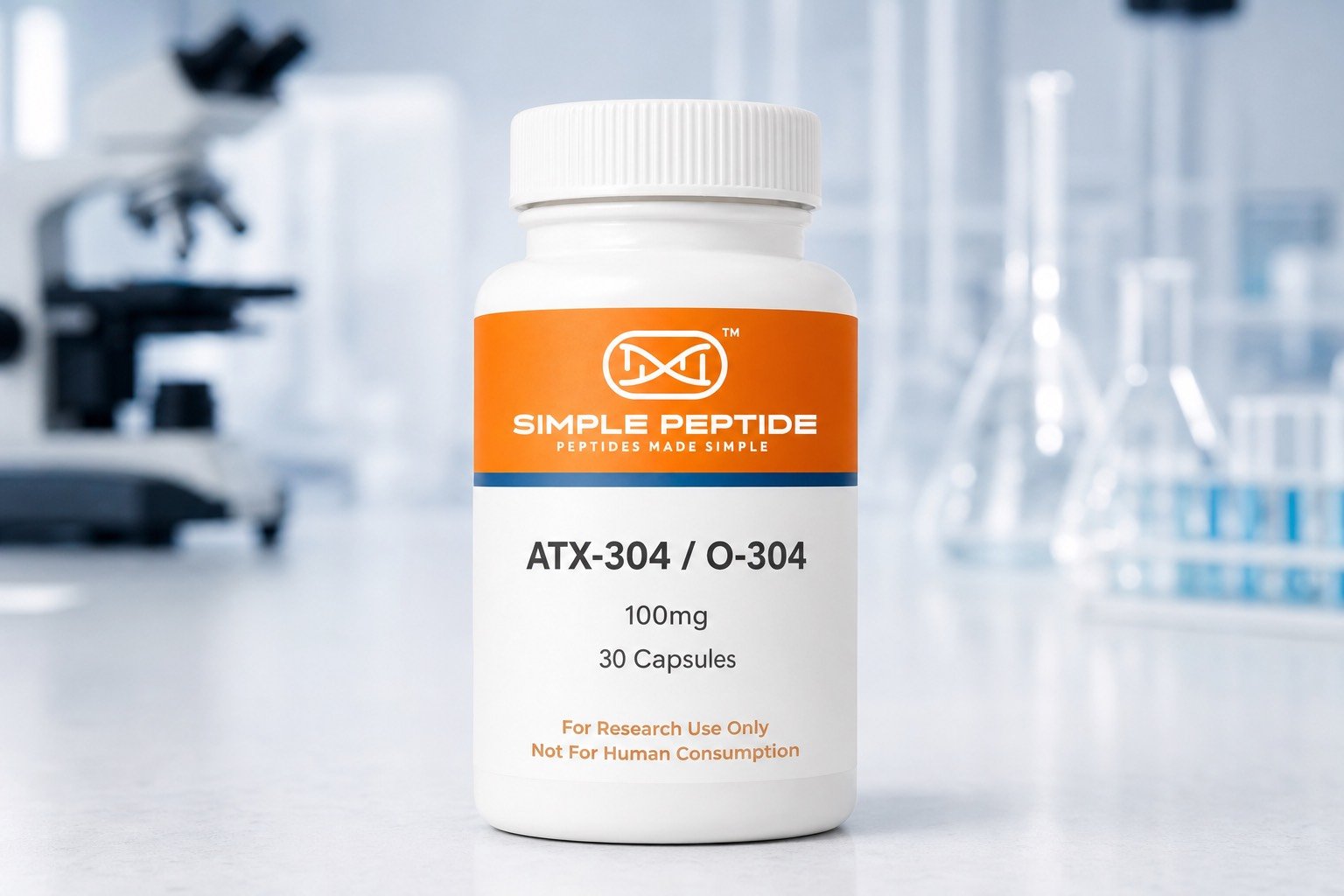
ATX-304: First-in-Class Dual Pan-AMPK and Mitochondrial Activator for Research
ATX-304 (formerly O304) is a novel, orally bioavailable, peripherally restricted small molecule functioning as a dual pan-AMPK (AMP-activated protein kinase) and mitochondrial activator. The compound’s actions closely resemble the cellular effects observed during exercise and caloric restriction, making it a powerful tool for investigating cellular energy homeostasis.
Unique Mechanism of Action
- Non-Allosteric Pan-AMPK Activation: ATX-304 stabilizes the active form of AMPK by suppressing the dephosphorylation of threonine-172 (pT172) on the AMPKα subunit. This mechanism activates all AMPK isoforms and requires the upstream kinase LKB1 for activity. Importantly, ATX-304 activates AMPK without inducing cellular ATP depletion, providing a distinct research modality compared to indirect activators.
- Mitochondrial Modulation: Preclinical data confirms ATX-304 increases mitochondrial respiration via a degree of mitochondrial uncoupling in cellular models, enhancing basal metabolic activity.
- Peripheral Restriction: The compound is intentionally designed not to cross the blood-brain barrier (BBB), focusing research applications on peripheral metabolic systems.
Key Preclinical and Approved Human Study Data
Preclinical models confirm the catabolic metabolic switch induced by ATX-304, including fat mass reduction with preservation of lean tissue. Studies in aged mice demonstrated that the precursor compound O304 improves metabolic and cardiac function, characterizing it as an “exercise mimetic”. Furthermore, the compound has shown protection against cisplatin-mediated kidney injury via AMPK-dependent metabolic reprogramming in tubular epithelial cells [cite: 14].
In approved human studies, ATX-304 has demonstrated consistent safety and favorable pharmacokinetics. A Phase I study established a well-tolerated and safe dose range [cite: 15]. A Phase IIa trial in type 2 diabetes patients showed a statistically significant reduction in diastolic blood pressure and an increase in peripheral microvascular perfusion [cite: 6, cite: 16].
Be the first to review “Simple Peptide O-304 / ATX-304 (OS-01) Capsules”
Related products

Uncategorized
Uncategorized
Uncategorized
Uncategorized
Uncategorized
Uncategorized
Uncategorized
Uncategorized
Reviews
There are no reviews yet.